What we do · Professional foundations
Teamwork & Problem Solving
Getting to a good outcome with other people involved.
Overview
What this area of our work covers.
This area develops the ability to work productively inside a group and to approach problems in a structured way. It covers dividing work, holding one another to commitments, disagreeing usefully, defining a problem accurately and testing solutions before adopting them.
AYCADO delivers this work because most professional output is collective, while most education is assessed individually. Young people therefore arrive at work skilled at producing their own answer and inexperienced at producing a shared one. The result is avoidable friction, duplicated effort and stalled decisions.
Problem solving is treated alongside teamwork because the two fail together. A group that cannot reason through a problem defaults to the loudest opinion, and a good analysis that no one accepts changes nothing.
Who it is for
- Students working on group assignments and projects
- Young professionals in team based roles
- Participants in AYCADO project and workshop activity
- Young people coordinating community initiatives
Learning objectives
What participants work towards.
- Contribute effectively to a team without dominating or disappearing
- Define problems accurately before proposing solutions
- Use a structured method to generate, test and select options
- Manage disagreement and shared accountability inside a group
Key areas of development
Where the development happens.
- Collaborative working
- Agreeing roles, dividing work fairly, tracking progress and handling a member who is not delivering.
- Problem definition
- Separating symptoms from causes and stating the actual problem before rushing to a fix.
- Structured reasoning
- Generating options, weighing evidence and trade offs, and making a decision the group can defend.
- Constructive disagreement
- Challenging an idea without attacking a person, and reaching a decision the group will actually implement.
Practical experience
How it is practised.
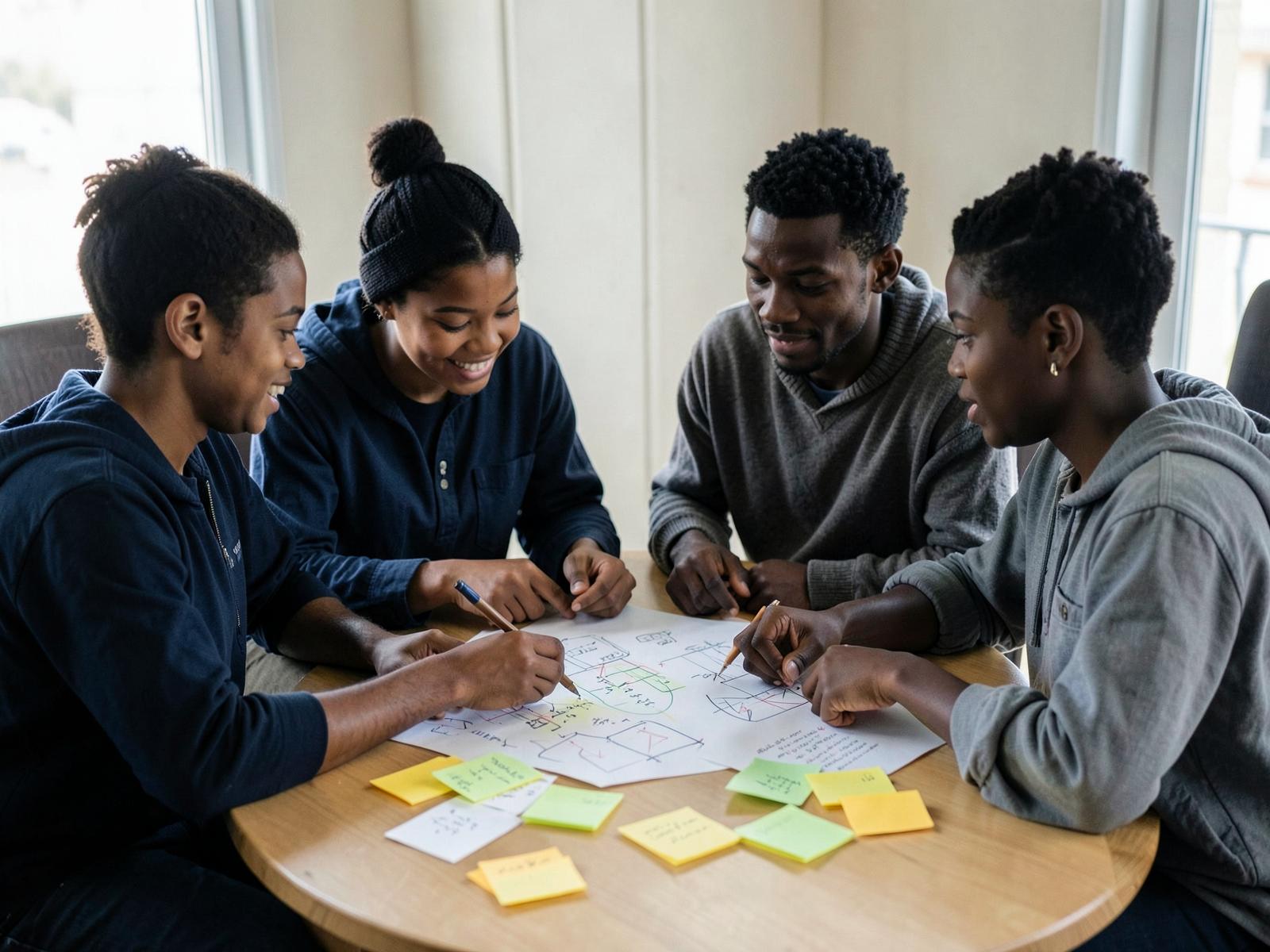
Participants work in teams on set problems with limited time and incomplete information, which is how problems usually arrive. Each team presents its reasoning, not only its answer, and receives feedback on both the process and the outcome.
Teams are deliberately reshuffled so participants experience working with people they did not choose, including in roles they would not have selected for themselves.
Career relevance
Why it matters for work.
Teamwork and problem solving are among the most frequently assessed competencies at interview and the most visible in early performance. A young person who can steady a group and structure a problem quickly becomes useful far beyond their formal experience.
Participant experience
Sessions are active and time pressured, with real deliverables at the end. Participants should expect to work with others rather than listen.
Programme delivery
How it is delivered.
- Workshop based team exercises and simulations
- Practical group assignments with defined deliverables
- Collaborative online sessions
- Facilitator review of process as well as result
Expected outcomes
What participants should take away.
Practical experience contributing to a functioning team
A repeatable method for approaching unfamiliar problems
Greater comfort with disagreement and shared responsibility
Evidence of collaborative work to draw on at interview
Why this work matters
The wider significance.
Across Africa, a large share of young people complete their studies without ever being taught how professional environments actually work. They are assessed on knowledge, then judged at work on conduct, communication, judgement and reliability. That gap is not a talent problem. It is a preparation problem, and it is one of the most solvable barriers standing between capable young people and meaningful work.
Foundational professional capability compounds. A young person who can express an idea clearly, work inside a team, take responsibility for a task and behave with integrity becomes employable in many settings rather than one. The same capability makes them more effective in community life, in family responsibility and in any enterprise they later build.
Related programs
Where this sits in our pathways.
- 02
AYCADO Skills Lab
Learn by doing. Then do it again, better.
- 06
AYCADO Projects
Responsibility is the fastest teacher.
- 04
Workshops & Bootcamps
Intensive, focused, practical.
Who this serves
The young people this work is designed for.
Students seeking practical experience
Learners who want project work, collaboration and hands-on responsibility.
Young professionals
Early-career professionals building competence, confidence and progression.
Secondary & university students
Young people still in formal education who want practical capability alongside academic study.
Youth in leadership & community development
Young people committed to leadership, innovation and contribution to their communities.
Partner with AYCADO
How organisations can take part.
- Training partnerships
- Schools, universities and institutions can host AYCADO sessions for their students, or co design content that fits an existing academic calendar.
- Facilitation support
- Employers and experienced professionals can contribute facilitation, feedback and realistic standards to sessions in their area of expertise.
- Knowledge partnerships
- Organisations can share the competencies they actually recruit for, so that what young people practise stays connected to what workplaces require.
Support this work
Where support makes a difference.
- Programme sponsorship
- Support the delivery of a training cycle so that participation does not depend on a young person's ability to pay.
- Training resources
- Contribute learning materials, venue access or facilitation capacity that raises the quality of every session delivered.
- Participation support
- Help young people in more difficult circumstances take part, including those balancing study with work or travelling from outside major cities.
Contact us about this
Ask us about this area of our work.
Next step
Take part in this area of our work.
Tell us where you are in your studies, career or enterprise and we will point you to the most relevant AYCADO pathway.